Where the last trees give out and rock meets sky, the resin seeps from stone each brief summer. Highland families have gathered it for generations, by hand, as slowly as the mountain demands.
02
Prepared in London
Every batch arrives at our London workroom, where it is prepared, hand-filled into glass, and given the batch number it will carry for the rest of its life.
03
Delivered to the world
From London it goes on, wherever there are mountains to climb.
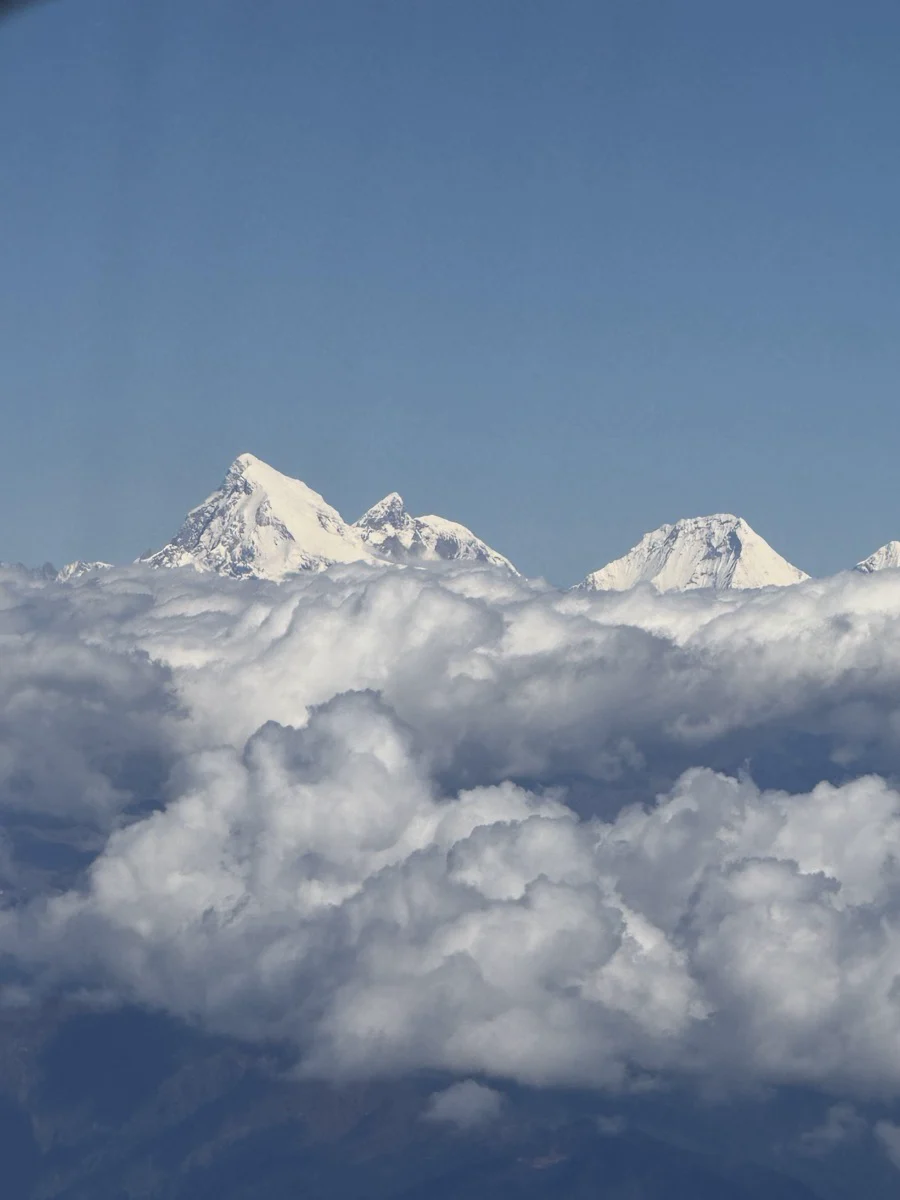
The Altai Mountains, above the treeline, and the highland families who gather it there each summer.
What shilajit is
If someone asks you what shilajit is, here is the short answer: a natural resin that forms inside high mountain rock over a very long time. Ours comes from one range in the Altai, and from nowhere else.
Researchers describe it as a phytocomplex — not one extracted compound but a whole mixture, assembled inside the rock rather than manufactured anywhere. That is why it leaves the mountain as a resin, and why no two ranges give quite the same thing.
How it forms
Phase 1BuriedPlant matter is sealed into the mountain, away from the surface, where microorganisms begin to break it down.
Phase 2Decomposition under pressureCenturies of compression, heat and oxidation within stratified rock layers.
Phase 3Summer seepageIn the warmth of the short mountain summer it seeps from fissures in the rock as a dark, glossy resin.
Why the Altai
Shilajit takes its character from the rock it forms in, so the range matters more than the label on the pot. The Altai are high, remote and far from roads and industry, and ours comes from one range there and nowhere else.
The people who gather it
The same highland families return to the same rock faces each brief summer, as their parents did. It is gathered by hand.
Collection is slow, which is the honest reason a small pot costs what it does.
What we will not do
We will not tell you how you are going to feel. We will not add anything to make the pot heavier or the colour deeper, and we will not invent a shortage to hurry you along. Shilajit has been gathered the same way for a very long time. Our job is to move it from the mountain to you without changing it, and then to show you the paperwork.
If shilajit is not right for you, we would genuinely rather you did not buy it.
Every batch is tested by an independent UK laboratory before it goes on sale. We publish each report in full, not a summary.
Where else it is found
Shilajit is not unique to one country. It is collected in the Himalaya, in Tibet, in the Andes and across Central Asia, and each range gives a resin with its own character. Sellers tend to argue that their mountain is the best one. We would rather not: we simply tell you ours is Altai, from a single range, and publish what the laboratory finds in it.
How it is taken
The usual amount is a pea-sized piece, roughly 300 to 500 mg, once a day. Many people take it in the morning, some in the evening. There is no ceremony to it.
Warm water is the plain method: stir it into a cup hot enough to drink but never boiling. There is nothing to be gained from boiling water, and the resin dissolves perfectly well without it.
If the taste is too sharp at first — it is earthy and frankly bitter — warm milk, dairy or plant, softens it. So does herbal tea left to cool a little, a spoonful of honey stirred into a paste, or dropping the piece straight into a morning smoothie. All of that is about taste and nothing more.
When to check with a doctor first
Shilajit is a food supplement, not a medicine, and it is not a substitute for any treatment. Please speak to a doctor before taking it if any of the following apply to you:
You are pregnant or breastfeeding
You take any prescribed medication, or have an ongoing medical condition
You are considering it for anyone under 18
You have a known allergy to shilajit, or have reacted to it before
And if you are simply unsure, ask anyway. We would rather you checked.
About the mountain and the people
Which mountains, exactly?
The Altai range, where Siberia, Mongolia, Kazakhstan and China meet. Our resin comes from one part of it, and from the same rock faces each year.
Who gathers it?
Highland families who have worked those cliffs for generations, on foot and by hand.
Why only in summer?
The resin only seeps from the rock when the mountain is warm enough, and the window is a few short weeks. For the rest of the year there is simply nothing on the cliffs to collect.
Is it wild or farmed?
Wild. Shilajit cannot be farmed or manufactured — it is only ever collected where it emerges from the rock. Nothing about ours is planted or grown.
Why bring it to London?
Because that is where we are, and because it puts the preparation, the packing and the laboratory within reach of one another. Dikanska Ltd is a British company and the pot is filled here.
Take your time with it.
Shilajit is not a thing to hurry. Start with one pot, see whether it earns a place in your morning, and decide for yourself. If you know someone who loves the mountains, tell them about us — that is how small companies like ours grow.
Food supplement. Do not exceed the recommended daily portion. Food supplements should not be used as a substitute for a varied and balanced diet and a healthy lifestyle. Keep out of the reach of young children.
Two thousand years in the making
The story of the Altai
Where Siberia, Mongolia, Kazakhstan and China meet, the Altai rise — “the golden mountains”, as the old Turkic name is often read. People have lived among these peaks for thousands of years: nomad herders, hunters and mountain families who moved with the seasons, read the weather in the clouds and knew every cliff and spring. What the mountains offered, they learned to use — and what was rare, they treasured.
Among the rarest of those finds was a dark resin that seeps from cracks in the high rock during the short mountain summer. The old stories say the animals revealed it first — hunters watched ibex seek out the black seams on the cliffs and wondered what drew them there. People climbed to those same ledges, gathered the resin, and passed the knowledge down, generation after generation.
Word of the mountain resin travelled far. Caravans carried it along the trade routes of Central Asia, and travellers wrote of it from Persia to India, where it took the name shilajit — often translated as “conqueror of rocks”. For some two thousand years it has been collected the same way: by hand, in high places, a little at a time.
That is why we are here. Altai Elements exists to bring you the best of the best from those same mountains — genuine high-altitude resin, hand-collected, purified with mountain water and lab-tested in the UK — so that a tradition two thousand years old arrives at your door with nothing added and nothing lost.
And this is only the beginning — more products from the Altai are coming soon.